Table of Contents
Anyone who has ever experienced hangover anxiety after drinking will have no problem understanding the term Hangxiety.
They physical symptoms of a hangover caused by too much alcohol are bad enough. But the mental and emotional toll of high anxiety after drinking alcohol can be even worse.
Hangxiety is a term coined for the feelings of anxiety that can coincide with the nausea, dehydration, headache, and other symptoms of a hangover.
Hangover Anxiety and Hangxiety
Hangover anxiety is a feeling of fear, worry, or nervousness that accompanies the uncomfortable physical symptoms of alcohol withdrawal after a day or night of drinking.
While people who experience anxiety disorders may be more prone to “hangxiety,” even those without preexisting mental health issues experience heightened feelings of dread, insecurity, and worry during a hangover.
Anxiety disorders are one of the most common forms of mental health disorders.
The Anxiety and Depression Association of America reports that an estimated 3.1 percent of the U. S. population, or nearly 7 million adults suffer from generalized anxiety disorder.
Research into the mental and emotional toll of excessive alcohol use suggests nearly 12 percent of people experience hangover anxiety, according to the Journal of Clinical Medicine.
Causes of Anxiety After Drinking
There are many causes of anxiety, with alcohol and substance use being one of them.
In addition, there are other factors that impact feelings of hangxiety after drinking alcohol.
It’s important to point out that a hangover is a mild form of alcohol withdrawal. The withdrawal period generally lasts from 24 to 72 hours and occurs while the body is going through the chemical process of detoxification.

Common causes of hangover anxiety include:
1. Alcohol consumption affects the levels of serotonin in the brain, a chemical that has a direct impact on mental wellbeing.
2. Drinking alcohol depletes folic acid in the body, a mineral believed to play a role in mood.
3. Alcohol releases a flood of endorphins, often referred to as a “feel good” neurotransmitter that can eventually lead to a negative comedown.
4. Sleep disruption, dehydration, and eating junk food with alcohol make the symptoms of withdrawal and the accompanying hangover anxiety worse.
5. The potential anxiety of social embarrassment while drinking.
As few as one or two drinks of alcohol lowers a person’s inhibitions, causing them to say or act in ways they might not when sober.
Regretting these actions or not being able to remember what happened while drinking can severely intensify hangover anxiety.
Alcohol Induced Anxiety Symptoms
The mental and emotional symptoms of alcohol induced anxiety are never fun.
The physical discomfort from drinking too much can compound hangxiety and cause it to last longer than most people expect.
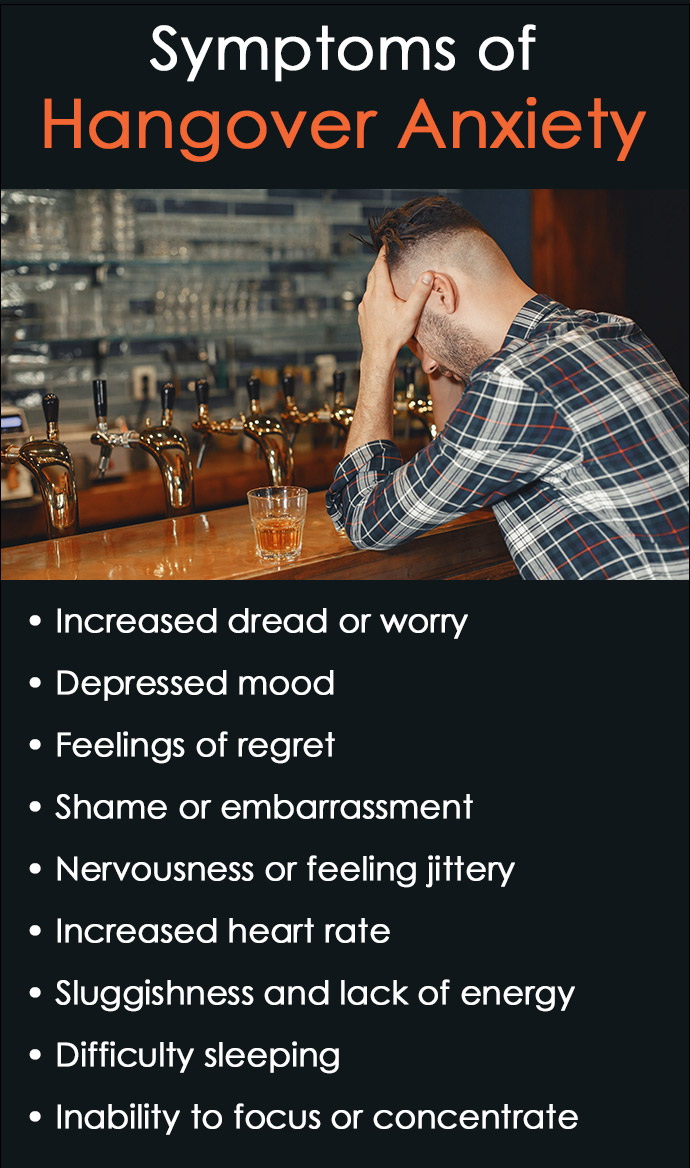
Common symptoms of hangover anxiety include:
- Increased sense of dread or worry
- Depressed mood
- Feelings of regret
- Shame or embarrassment from behavior while under the influence of alcohol
- A general sense of nervousness, or feeling jittery and uncomfortable
- Increased heart rate
- Sluggishness and lack of energy
- Difficulty sleeping
- An inability to focus and concentrate because of increased worry
The severity of anxiety hangover symptoms will be different for each person and can range from mild to extreme.
The duration of hangxiety symptoms can also vary, depending on how much a person had to drink and how long it takes the body to process the alcohol.
The good news is that hangover anxiety after drinking is temporary for most people. More importantly, it is also preventable.
Hangover Anxiety Cure
The best hangover anxiety cure is to avoid drinking alcohol altogether.
That said, there are steps people can take before and after drinking to avoid or reduce hangover anxiety.
Ways to Reduce an Anxiety Hangover Before and During Drinking
1. Limit alcohol intake
For some people, enjoying one or two drinks is easy. For others, one or two drinks typically leads to continued drinking because alcohol affects the decision-making process.
Planning to only have one or two drinks helps people stop drinking when they hit their limit.
Unfortunately, some people are unable to control their drinking regardless of any plans or safeguards they put in place before they begin.
For those who cannot control their drinking or the consequences, it may be necessary to seek alcohol treatment.
2. Eat food before and during drinking
Drinking on an empty stomach leads to getting drunk quicker, so eat something substantial before drinking. Eating food or snacks while drinking will also lessen the side effects of alcohol on the body.
Even though eating right before bed is not usually recommended, having some type of food before going to sleep will minimize the effects of a hangover the next day.
3. Hydrate with water
Dehydration is one of the worst symptoms of a hangover. It physically hurts the body and mentally intensifies hangover anxiety.
Matching each alcoholic beverage with a glass of water not only helps slow down a person’s alcohol intake, but it also keeps the body hydrated. Just be prepared to go to the bathroom more often.
Hangover Anxiety Cure for After Drinking
1. Hydrate with water
Drinking plenty of water after drinking fuels the body with what it needs most to overcome dehydration. This should be done before going to bed and immediately after waking up.
2. Sleep
It may seem like it’s easy to go to sleep after drinking. But in reality, alcohol causes poor sleep patterns during the night, which is one reason for feeling sluggish in the morning.
Going back to bed or taking a nap, if possible, will help the body regenerate and lessen hangover anxiety symptoms.
3. Pain medications
When the physical effects of drinking cause a headache or body aches, taking an over-the-counter pain medication like aspirin or ibuprofen can shorten the duration of pain.
Not only will this help with the physical symptoms, but it can also have an impact on lowering the hangover anxiety from withdrawal.
Avoid taking Tylenol during or immediately after drinking alcohol because it can increase the risk of liver damage.
It is not recommended to use benzodiazepine anti-anxiety medication for hangxiety symptoms because they should not be mixed with alcohol in the system.
Some antidepressants like lexapro and alcohol probably don’t mix well either, although they are not as dangerous.
4. Eat a light meal
Eating something light and bland will absorb any alcohol remaining in the system and nourish the body.
The BRAT Diet (bananas, rice, applesauce and toast) is a good option, as well as soup, oatmeal, and crackers.
5. Mindfulness and Meditation
Using mindfulness and meditation with controlled breathing is effective for easing the symptoms of anxiety caused by drinking.
Meditation will also distract the mind from feeling crappy physically.
Vagus nerve exercises use meditation and mindfulness to reduce stress and anxiety.
The 54321 Grounding Technique is one of the most effective mindfulness tools for distracting the mind to provide anxiety relief.
6. Light exercise
Most people find it difficult to get out of bed or function normally, let alone exercise when experiencing hangover anxiety after drinking.
Doing something easy like taking a walk outdoors will get the blood circulating, boost endorphins to ease pain, and improve mood.
Most people will start to feel better in a day or two after the alcohol makes its way out of the system.
As mentioned previously, the best way to avoid hangxiety altogether is to not drink at all. But for those who drink and regularly experience high anxiety after drinking, the tips outlined here will help make it more manageable.
Hangxiety FAQs
What is hangxiety?
Hangxiety is a slang term for the hangover anxiety many people feel the morning after drinking alcohol.
It combines the emotional symptoms of anxiety, such as worry, dread, or shame, with the physical symptoms of a headache, nausea, and fatigue.
Does a hangover always cause anxiety after drinking?
No, a hangover does not always cause anxiety.
Research suggests that only a minority of people experience anxiety hangover symptoms, possibly in the range of 10 to 20 percent of drinkers.
Most people who wake up with a hangover will have physical symptoms that include a headache, nausea, and fatigue, but generally don’t have high anxiety after drinking.
How long does hangover anxiety last?
The anxiety usually lasts about as long as the hangover and generally disappears within 12 to 24 hours after it begins.
The symptoms will be most severe in the morning after waking up and will gradually subside throughout the day.
How can I cure hangxiety quickly?
It may be difficult to speed up the process of curing hangover anxiety quickly since it takes time to run its course as the body recovers.
Eating some type of food, getting plenty of water to rehydrate, and light exercise outdoors may lessen the physical symptoms. The potassium in bananas can be helpful, and drinks like Gatorade that have electrolytes are a good option.
Meditation, grounding techniques, and breathing exercises can be beneficial for easing the mental anxiety symptoms.
If possible, going back to bed and sleeping it off might be a way to avoid the worry caused by hangover anxiety.
Who is most likely to experience an anxiety hangover?
People with anxiety disorders, depression, and those who use alcohol to cope with mental health issues are most at risk of experiencing hangxiety.