Table of Contents
The end of the year is a time of joy and celebrating with family and friends, although increased stress, and parties with alcohol and substance use make it difficult to remain sober.
Staying sober during the holidays is especially challenging for those in recovery. A holiday relapse prevention plan helps manage and avoid common triggers.
Recognizing addiction triggers and following a plan will maintain sobriety and bypass the negative effects of drinking.
Defining Addiction Relapse
Addiction relapse occurs when an individual in recovery returns to using drugs or alcohol and engages in addictive behavior.
The National Institute on Drug Abuse (NIDA) defines addiction as, “a chronic, relapsing disorder characterized by compulsive drug seeking and use despite adverse consequences.”
The term “relapse” is a central component of the definition of addiction, and it should not be viewed as a sign of failure but rather a common and difficult part of the recovery process.
An article published in the National Library of Medicine points to studies that have shown relapse rates can be as high as 85% in the first year following treatment.
Several factors contribute to addiction relapse, and they vary from person to person. Common relapse triggers include stress, negative emotions, social pressure, environmental influences, and exposure to addictive substances.
Understanding and identifying addictive triggers and developing a relapse prevention plan are crucial for staying sober during the holidays.
Identifying Relapse Triggers
Addiction triggers are events or situations that produce strong cravings and may lead to a relapse or return to substance use.
Relapse triggers are different for each individual and they are often linked to specific memories, emotions, people, or places associated with previous substance use.
Understanding and identifying addiction triggers is crucial for developing a holiday relapse prevention plan.
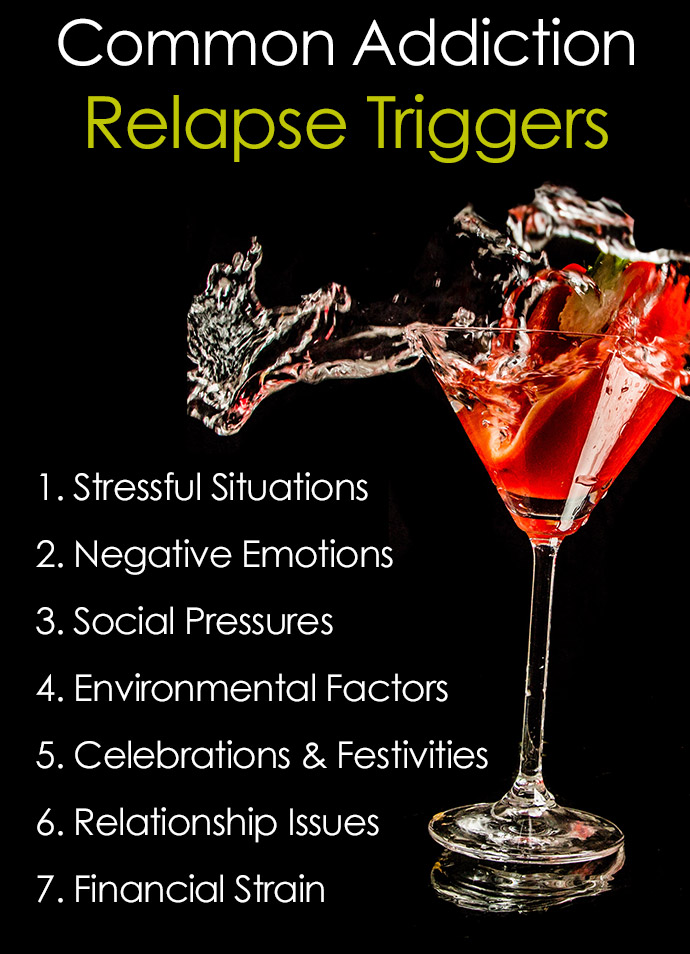
Common Relapse Triggers
1. Stressful Situations
Stressful situations can trigger the need to use drugs or alcohol to cope with feelings of stress and other symptoms.
2. Negative Emotions
Feelings of sadness, loneliness, or depression are powerful relapse triggers for individuals in recovery.
3. Social Pressures
Being around people using drugs and alcohol or feeling pressure to participate in unhealthy social activities can be difficult.
4. Environmental Factors
Revisiting places associated with past substance use can act as a powerful trigger that may cause a relapse.
5. Celebrations and Festivities
Celebrations and festivities like the holidays are intended to be happy events but they can also be a reminder of prior substance use that is triggering for many people in recovery.
6. Relationship Issues
Failed relationships with family or friends contribute to emotional distress.
7. Financial Strain
Money issues, debt, and financial insecurity lead to an increase in stress and anxiety.
These are some of the most common addiction triggers and it’s important to consider how the holidays play a role in triggering a relapse.
How the Holidays Can Trigger Relapse
Despite the happy and festive nature of the holiday season, it’s essential for those in recovery to recognize how the holidays can trigger relapse.
1. Increased Stress Levels
The holiday season is overflowing with social obligations, financial pressures, and family responsibilities that elevate stress levels.
For individuals in recovery, increased stress is an influential addiction relapse trigger that compels people to self-medicate with alcohol or drugs.
2. Intensified Emotions
The holidays create a mix of positive and negative emotions, from joy and excitement to sadness and nostalgia.
For those in recovery, intensified emotions amplify the risk of relapse, especially when they are associated with substance use.
3. Social Expectations
Expectations run high during the holidays, and everyone is encouraged to engage in social activities and celebrations whether they want to or not.
This may expose individuals to environments where substance use is prevalent, or to be around people that remind them of their time before they became sober.
4. Isolation and Loneliness
While the holidays are a time for connecting with family and friends, some people experience feelings of isolation or loneliness, which can be a powerful relapse trigger.
This is especially troubling for those who have a strained family relationship or live far from loved ones.
5. Erratic Schedule
For people in recovery or those with mental health issues, sticking to a regular schedule creates a sense of calm and consistency that makes life easier to stay on track.
Trying to meet the obligations of a busy holiday schedule can cause mental instability and heighten the need to use substances as a coping mechanism.
6. Weather and Time of Year
The end of year holidays can be cold and have fewer daylight hours, so people spend more time inside and get less exercise and exposure to sunlight.
This has a negative impact on energy, mood, and the way we feel.
After identifying the causes behind common triggers, a holiday relapse prevention plan offers strategies for managing them and staying on track during recovery.
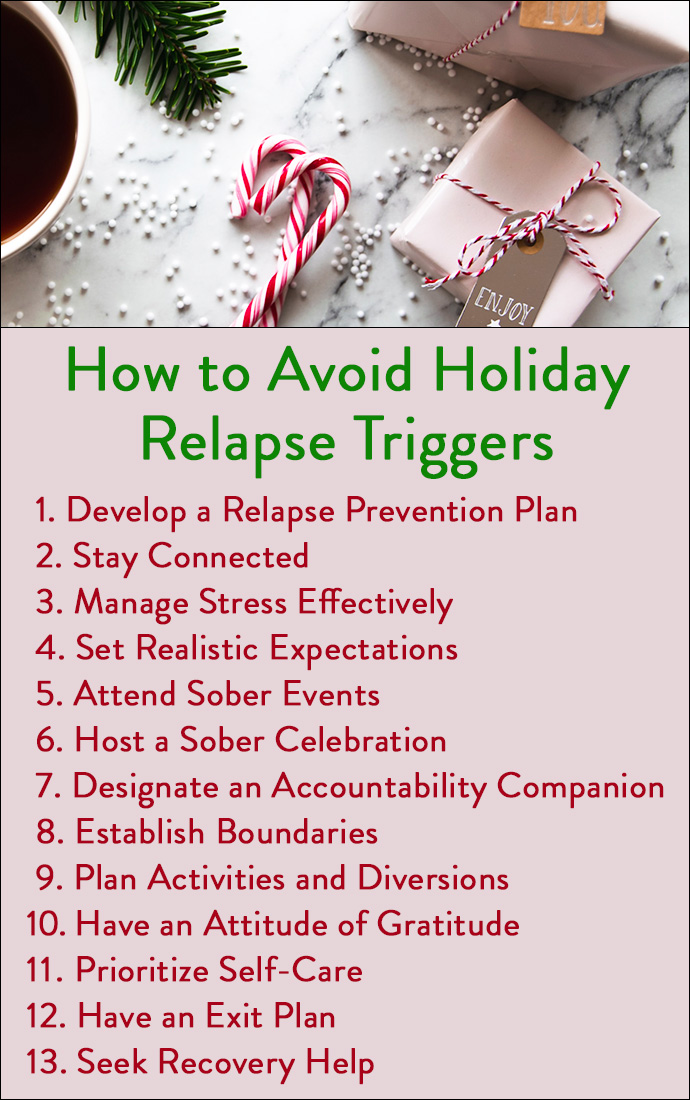
Holiday Relapse Prevention Plan to Avoid Addiction Triggers
1. Develop a Holiday Relapse Prevention Plan
Identify specific triggers and coping strategies that are specifically tailored to your individual needs.
Work with a therapist or support group to create a personalized holiday relapse prevention plan to make it through the seasonal festivities.
It can be a formal or informal plan and doesn’t have to be fancy, as long as it makes it easy to follow for your own personal needs.
2. Stay Connected
Build a strong support network and communicate openly with family, friends, or a sponsor and let them know as soon as you feel overwhelmed by holiday stress.
Attend therapy or support group meetings regularly, even during the holidays.
3. Manage Stress Effectively
Practice grounding techniques and stress-reducing activities that work best for you. Good strategies include exercise, meditation, deep breathing exercises, and yoga.
Plan ahead and set aside time for gift shopping or event preparations to avoid last-minute holiday stress.
Here are some mental health tips for the holidays to effectively manage stress.
4. Set Realistic Expectations
Be realistic with your expectations during the holiday season and don’t feel compelled to attend every event you’re invited to. Focus on the quality rather than the quantity of activities.
5. Attend Sober Events
Attend sober events or activities in your community during the holidays. Many organizations and support groups organize alcohol-free gatherings that provide a safe and supportive environment for those in recovery.
6. Host a Sober Celebration
Host a sober celebration yourself and invite friends in recovery as well as others who are looking for a break from alcohol-related parties. Have a mocktail recipe contest to see who has the best non-alcoholic drink concoctions.
7. Designate an Accountability Companion
Designate a friend, family member, or sponsor who will serve as an accountability companion throughout the holidays. Having a trustworthy person to check in with regularly or attend events with will provide support during challenging times.
8. Establish Boundaries
Talk openly about sobriety with friends and family and set clear boundaries regarding drugs or alcohol before attending events.
Politely decline invitations to activities that may jeopardize your sobriety.
9. Plan Activities and Diversions
Plan sober activities with people you care about, such as game nights, movie marathons, or outdoor adventures. It’s entirely possible to participate in enjoyable activities that do not involve alcohol or other substances.
10. Have an Attitude of Gratitude
Having an attitude of gratitude and focusing on the positive aspects of your recovery will make it easier to avoid common relapse triggers during the holidays.
A gratitude jar or journal is a helpful way to document your progress and remind you of all the good in your life.
11. Prioritize Self-Care
Practice simple self care ideas and make them a priority during the holidays. Ensure you get proper sleep and eat healthy foods in between the festivities.
It’s okay to enjoy holiday meals and treats but keep it in moderation and only during special events. Nobody needs to binge eat the entire month.
Never underestimate the positive effects of exercise on mental health for the holidays.
12. Have an Exit Plan
Prepare an exit strategy ahead of time for situations where drug or alcohol use is present. It’s easier to arrange transportation to leave events if you feel triggered or uncomfortable when you plan in advance.
13. Seek Recovery Help
If the holiday season becomes overwhelming, don’t hesitate to seek recovery help from a therapist, sponsor, or sober friend. Emergency helplines and crisis intervention services are just a phone call away.
Avoiding common relapse triggers requires awareness, planning, and a strong support system.
Identifying addiction triggers and creating a holiday relapse prevention plan makes it possible for everyone to enjoy the festivities while staying sober during the holidays.