Table of Contents
Cannabis Induced Psychosis (CIP) is a relatively rare condition, but it’s important to understand that using marijuana does in fact come with some risk.
Marijuana legalization and use is on the rise across the country while THC potency levels are skyrocketing.
The combination of increased use and more potent strains of marijuana can potentially lead to a spike in the number of people who experience cannabis induced psychosis or other negative health issues.
The condition is a form of substance induced disorder that leads to mental health issues caused from substance use, in this case marijuana.
Cannabis Induced Psychosis Explained
Psychosis itself is a set of symptoms often related to serious mental illness. Psychoactive substances, such as cannabis, psilocybin mushrooms, LSD, and other drugs, can also lead to a form of psychosis.
In many cases, people with a pre-existing mental health condition, such as schizophrenia, bipolar disorder, or others, are at a higher risk for developing cannabis-induced psychosis.
The symptoms of psychosis are characterized by a break with reality.
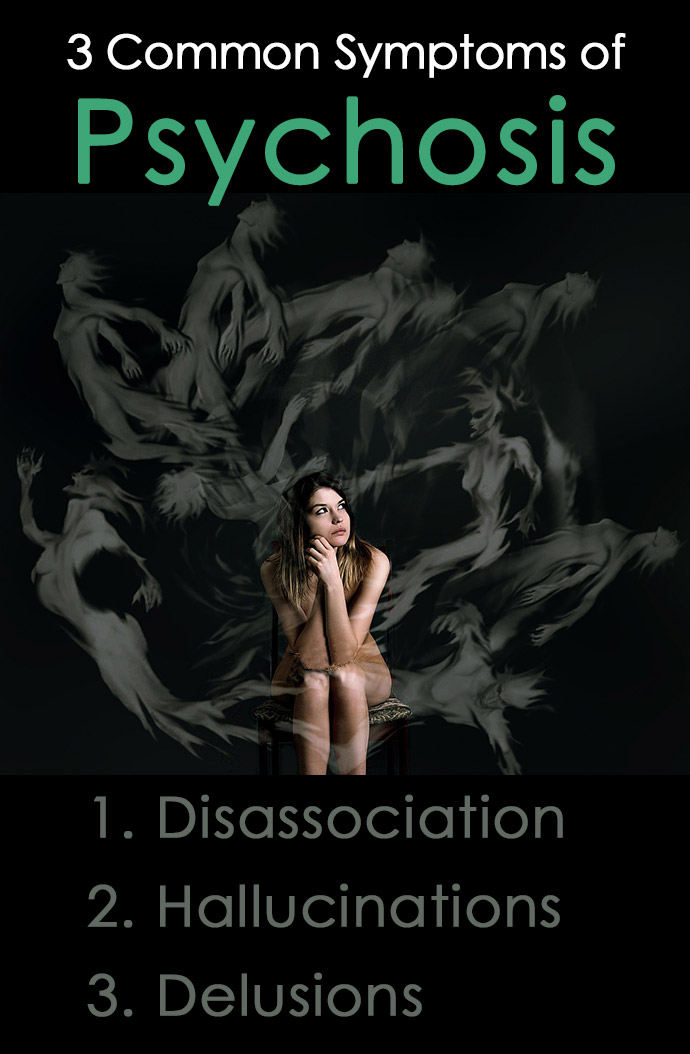
Three Common Symptoms of Psychosis
1. Disassociation
Disassociation is a sense or perception that a person is not actually connected to the world around them. This feels as if a person is not in their body or that the things around them are not real.
2. Hallucinations
Hallucinations are auditory or visual sensations experienced by a person that are not real. In some cases, other senses can also be affected, such as touch and smell.
3. Delusions
Delusions are the belief in something that can be proven to be false, such as the feeling of being immortal or thinking that everyone is out to get them.
Cannabis-induced psychosis, sometimes called marijuana psychosis or weed psychosis, involves a break from reality, with symptoms of psychosis that first appear during marijuana use or shortly thereafter.
The condition is well documented, and research has shown that psychotic outcomes can range from mild to severe and may last for minutes to years.
However, in the majority of cases, many of the symptoms of cannabis-induced psychosis tend to subside shortly after the drug has worked its way out of the body or a person stops using marijuana.
Cannabis Induced Psychosis Symptoms
Cannabis is often touted as medicinal, but the negative side effects of marijuana can actually worsen the symptoms of an existing mental health condition.
Individuals battling anxiety disorders or those who are suffering from some types of depression may experience symptoms that are more intense than normal because of the psychoactive properties of weed.
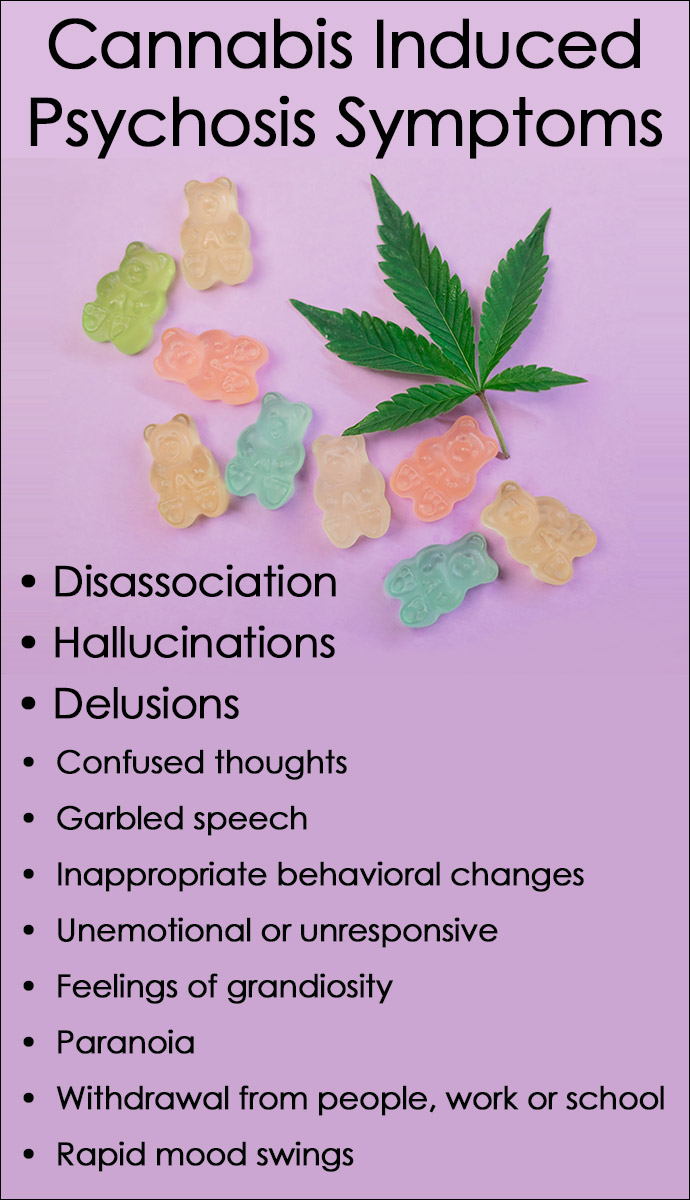
While the primary symptoms of cannabis-induced psychosis are delusions, hallucinations and disassociation, there are other indicators that a person might be experiencing the condition.
Other Marijuana Induced Psychosis Symptoms Include:
- Confused thoughts, making it difficult to concentrate or think clearly
- Disorganized speech that comes out garbled, jumps around to different topics, and is difficult for others to make sense of
- Behavioral changes that cause a person to behave, react, or express emotion in ways that appear inappropriate given the circumstances
- Lack of an appropriate emotional response, as well as being unemotional or unresponsive
- Feelings of grandiosity or paranoia
- Withdrawal from family, friends, work, or school
- Rapid mood swings, from depressed or anxious to angry or agitated
Risk Factors for Marijuana Psychosis
There are several risk factors that can make a person more susceptible to developing marijuana induced psychosis.
1. Age
Some research suggests marijuana use at a young age can increase the chances of cannabis-induced psychosis and other mental health issues later in life. This is especially true for teenagers while the brain is still developing.
2. Genetics
People with a genetic family history of mental illness or substance use disorders may be at a greater risk of developing mental health issues related to using marijuana.
3. THC Potency
THC is the primary psychoactive ingredient in cannabis. Strains of marijuana with a high percentage of THC may be more likely to produce cannabis-induced psychosis symptoms.
4. Frequency and Duration of Marijuana Use
Regular and long-term marijuana use can increase the likelihood a person may experience signs and symptoms of this type of psychosis.
A majority of states in the U.S. allow for some form of legal marijuana sales and consumption – medicinal, recreational, or both.
Even though it is legal in many places, cannabis is still the most commonly used federally illegal drug, according to the Centers for Disease Control and Prevention.
In other words, cannabis use is so common that many people who use it fall into one or more of the risk-factor categories.
Cannabis Induced Psychosis Treatment
It can be difficult for medical professionals to correctly diagnosis marijuana induced psychosis as opposed to general psychosis because the symptoms are very similar.
The key distinguishing factor for weed psychosis is the presence of marijuana use.
The DSM-5 refers to the condition as Cannabis Induced Psychotic Disorder (CIPD), which is categorized as Schizophrenia Spectrum and Other Psychotic Disorders.
A diagnosis of cannabis induced psychotic disorder requires several factors, such as the presence of delusions and hallucinations.
More specifically, the delusions or hallucinations develop during or shortly after cannabis intoxication.
Cannabis intoxication can take minutes for a marijuana user to feel the effects of the drug when smoked. When it is eaten or ingested orally it can take several hours.
Psychosis brought on by marijuana use may be an indicator that a person is suffering from a substance use disorder, a mental health issue, or both.
In either case, an individual should seek treatment from a medical professional to get a proper diagnosis.
In the short-term, the primary treatment for cannabis induced psychosis is to stop all marijuana use.
Stopping all cannabis use might not be easy for some people who are dependent or addicted to marijuana.
In some cases, individuals with a marijuana use disorder may need to undergo substance addiction treatment to address any underlying problems. These can include past trauma, depression, anxiety, or other mental health conditions, that drive addictive marijuana use and cause the symptoms of psychosis.
Detox may or may not be required, although dual diagnosis treatment for addiction and mental health will be the most effective approach for recovery.
In severe cases of cannabis induced psychosis where a person may present a danger to themselves or others, immediate medical attention is needed, followed by longer-term evidence based treatment approaches.
FAQs About Cannabis Induced Psychosis
What is the definition of cannabis induced psychosis?
Cannabis induced psychosis is defined as a mental disorder with psychotic symptoms that cause distress or impairment and appear during or after marijuana use intoxication.
Distinguishing features of CIP:
- Symptoms are caused by cannabis use
- The effects appear during or shortly after cannabis intoxication
- Hallucinations or delusions are present
- Common symptoms of cannabis use like anxiety or paranoia are more severe than normally experienced from marijuana use
- Symptoms often subside after stopping marijuana use
How long does weed psychosis last?
The duration of weed psychosis will vary depending on the individual, frequency of use, amount consumed, potency of THC, and other factors.
Weed psychosis typically lasts for a few hours but may continue for several days or weeks in more extreme cases.
The most severe cases that last for weeks or months may require dual diagnosis treatment for substance use disorder combined with mental health issues.
How common is cannabis induced psychosis?
Cannabis induced psychosis is still a relatively uncommon condition, although the number of cases has been increasing in recent years due to expanding marijuana legalization and the growth of high potency strains.
It is estimated that 1% or fewer regular marijuana users will experience cannabis induced psychosis. While that number is low, it does not diminish the seriousness of this mental health condition.
Anyone experiencing hallucinations, delusions, severe paranoia, or other extreme symptoms should discontinue cannabis use and seek treatment if the effects do not subside.
Is there a difference between weed psychosis and paranoia?
Paranoia is a common symptom of marijuana use along with anxiety and other similar effects.
It can be a standalone symptom not related to weed psychosis.
However, extreme paranoia combined with hallucinations, delusions, and other psychotic symptoms that cause significant impairment may signify weed psychosis.
What is the difference between cannabis induced psychosis and schizophrenia?
Cannabis-induced psychosis and schizophrenia are similar, yet different conditions.
While they share some related symptoms, they differ in the onset, duration, and treatment.
Both conditions can include hallucinations and delusions.
Cannabis-induced psychosis occurs during or shortly after marijuana use intoxication. The symptoms generally disappear within a few days or weeks after an individual stops using cannabis.
Schizophrenia is a chronic psychotic disorder with symptoms lasting for six months or more that can cause significant impairment.
Schizophrenia does not stem from cannabis use and it requires ongoing psychiatric treatment often combined with medications.