Table of Contents
It’s common for alcohol addiction and bipolar disorder to occur together. Living with bipolar is hard enough on its own. When alcohol becomes part of the picture, life can become unmanageable.
What begins as drinking to unwind can turn into depression and using alcohol just to get through the day.
Many people living with bipolar disorder use alcohol to cope, only to find that it makes their symptoms worse over time.
When mood swings and drinking seem to fuel each other, it may be time to get help for both.
The combination of a mental health condition like bipolar disorder and a substance use disorder such as alcohol addiction is referred to as a co-occurring disorder or a dual diagnosis.
Summit Malibu’s dual diagnosis treatment program addresses both conditions together at the same time with a comprehensive approach designed to stabilize, heal, and recover in a healthy way.
Alcohol and Bipolar Disorder Dual Diagnosis
Defining Alcohol Use Disorder
Alcohol use disorder isn’t defined by how often you drink or what you drink. It’s defined by how alcohol affects your life. You may have a problem with alcohol if you:
- Struggle to cut back or stop, even when you really want to
- Drink more than you intended or for longer than you planned
- Experience cravings or feel anxious or depressed when you drink
- Keep drinking despite problems at work, in relationships, or with your health
Alcohol is depressant that slows down activity in the brain and other areas of the body. Increased anxiety and depression are just some of the negative effects of alcohol.
People don’t have to drink every day to have a dependence or addiction to alcohol. Binge drinking, repeated blackouts, or regularly using alcohol to cope with emotions can all signal a problem that requires attention.
Understanding Bipolar Disorder
Bipolar disorder is a mood disorder with shifts between elevated mood and depressive states. These mood changes are more extreme and last longer than normal highs and lows.
There are different types of bipolar disorder, and each one has its own unique characteristics:
- Bipolar I Disorder often involves full manic episodes that may include racing thoughts, a decreased need for sleep, impulsive or risky behavior, and a sense of being wired or unstoppable.
- Bipolar II Disorder includes less severe hypomanic episodes with disruptive periods of elevated mood along with significant episodes of depression.
- Cyclothymia is a milder, chronic form of bipolar with symptoms that can still impact daily functioning and quality of life.
Some people go years without a receiving a proper diagnosis. During that time, it’s common to use alcohol to self-medicate overwhelming emotions or mood swings.
Many famous people with bipolar disorder have talked openly about how treatment helped them manage the condition.
Why Alcohol and Bipolar Disorder Co-Occur
Two conditions that interact with and influence each other is known as a co-occurring disorder.
Alcohol can worsen bipolar symptoms, and bipolar symptoms can drive alcohol use.
Using Alcohol to Cope with Bipolar Mood Swings
People with bipolar disorder often start using alcohol to deal with ruminating thoughts or numb their emotions.
During manic or hypomanic episodes, alcohol is used to slow down racing thoughts or help with sleep.
During depressive episodes, alcohol can be a crutch to lessen emotional pain or ease feelings of emptiness, guilt, or hopelessness.
In the beginning, alcohol is somewhat helpful. This is what makes alcohol addictive for some people.
But over time, this type of self‑medication becomes an unhealthy cycle. As the brain adapts to regular alcohol use, mood swings become more frequent, more intense, or harder to control.
How Alcohol Affects Mood, Sleep, and Medication
Because alcohol is a depressant, it alters the brain chemistry involved in mood, anxiety, and sleep. For individuals with bipolar disorder, the brain is already sensitive and highly reactive.
Regular alcohol use:
- Disrupts sleep, which is one of the most important pillars for mood stability
- Intensifies depressive symptoms after the initial effect wears off
- Increases irritability, anger, and emotional stability
- Interferes with bipolar medications by reducing their effectiveness or increasing the side effects
A few drinks to relax can quickly escalate to more frequent and severe mood swings.
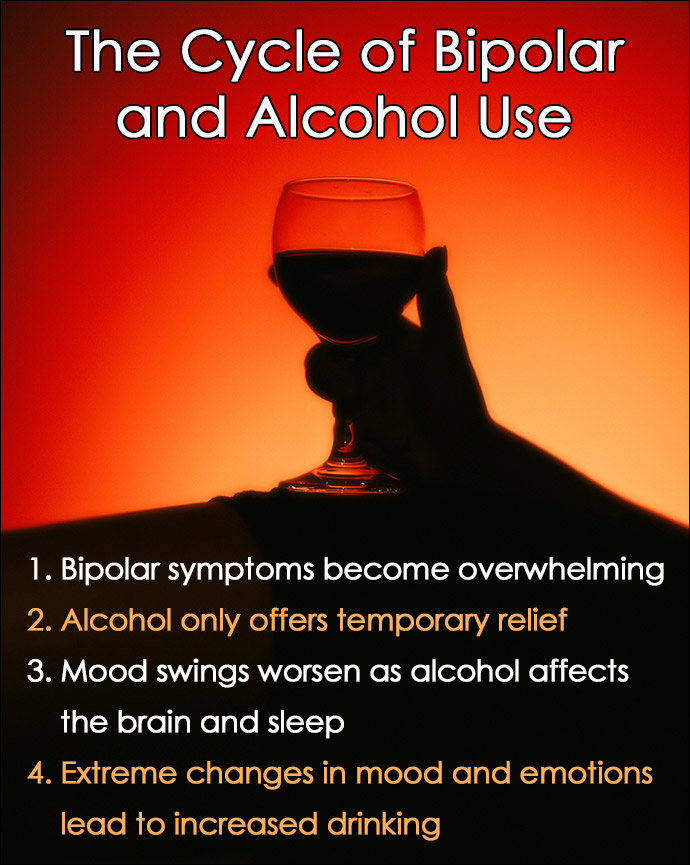
The Cycle of Bipolar and Alcohol Use
Over time, many people find themselves caught in an unhealthy cycle of increased alcohol use and heightened bipolar symptoms.
- Bipolar symptoms become overwhelming
- Alcohol only offers temporary relief
- Mood swings worsen as alcohol affects the brain and sleep
- Extreme changes in mood and emotions lead to increased drinking
Feeling ashamed or helpless about this deepening pattern is a normal process of structural and functional changes in the brain caused by a co-occurring addiction. Breaking the cycle requires structured support and an integrated dual diagnosis treatment plan.
Signs of Alcohol Addiction and Bipolar Disorder
Warnings Signs in Daily Life
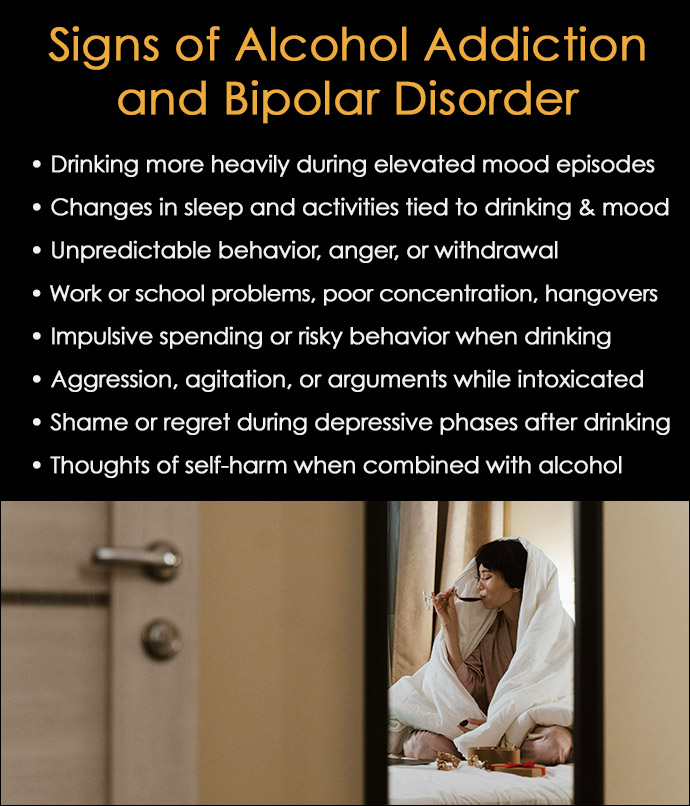
Signs that alcohol and bipolar disorder may be occurring together include:
- Drinking more heavily during periods of elevated mood or after big emotional crashes
- Sudden changes in energy, sleep, and activities tied to both drinking and mood shifts
- Unpredictable behavior, anger, or withdrawal
- Work or school problems due to missed days, poor concentration, or hangovers
It’s common for many individuals to notice their drinking increases during mood swings. or negative mood changes follow periods of heavy drinking.
Emotional and Behavioral Red Flags
Red flags of bipolar and alcohol addiction include:
- Impulsive spending, risky sexual behavior, or reckless driving after drinking
- Aggression, agitation, or arguments with loved ones while intoxicated
- Feelings of deep shame or regret during depressive phases after drinking
- Thoughts of self‑harm or suicide, especially when combined with alcohol
These signs suggest a level of risk that deserves immediate, professional attention.
When It’s Time to Seek Dual Diagnosis Treatment
When alcohol is affecting your personal safety, relationships, or ability to function combined with mood swings, manic or hypomanic episodes, or recurrent depressions, it may be time to seek treatment.
Dual diagnosis treatment for alcohol addiction and bipolar disorder at Summit Malibu provides:
- Medically supervised alcohol detox when needed
- Comprehensive psychiatric assessment and medication management
- Individual, group, and family therapy
- Holistic therapies that improve mood and emotional regulation
- A peaceful, ocean‑adjacent setting designed to reduce stress and heal the mind, body and soul
Frequently Asked Questions
What is a dual diagnosis of alcohol addiction and bipolar disorder?
A dual diagnosis of alcohol addiction and bipolar disorder means a person meets the medical criteria for both bipolar disorder and an alcohol use disorder at the same time.
It is also known as a co-occurring disorder, which is a mental health disorder plus a substance use disorder together, such as bipolar and alcohol use disorder.
Is it common for alcohol addiction and bipolar disorder to occur together?
Yes, alcohol addiction and bipolar disorder often occur together because they share overlapping risk factors and each condition can amplify or worsen the symptoms of each other.
Research shows people with bipolar disorder have very high rates of substance use disorders and alcohol is considered to be the most frequently used substance at approximately 42 percent.
How does alcohol affect bipolar?
Alcohol worsens mood symptoms and increases the frequency and severity of bipolar episodes.
Because alcohol is a central nervous system depressant it can increase depression symptoms while producing more frequent or intense manic or hypomanic symptoms.
Alcohol also impairs judgment and increases impulsivity, which has a negative impact on bipolar mood swings.
How are alcohol and bipolar dual diagnosis treated in a residential program?
At Summit Malibu, our comprehensive dual diagnosis treatment program uses evidence-based therapies for alcohol addiction treatment, combined with holistic therapies to heal bipolar disorder symptoms.
Treatment begins with an assessment and stabilization that includes the Summit detox process in a supervised setting to manage alcohol withdrawal.
Medication Assisted Treatment is beneficial for managing withdrawal symptoms and stabilizing mood.
After detox, individual and group psychotherapy sessions combine evidence-based therapies like CBT, DBT, Psychoeducation, and others to build coping and relapse prevention skills for successful, prolonged recovery.