Table of Contents
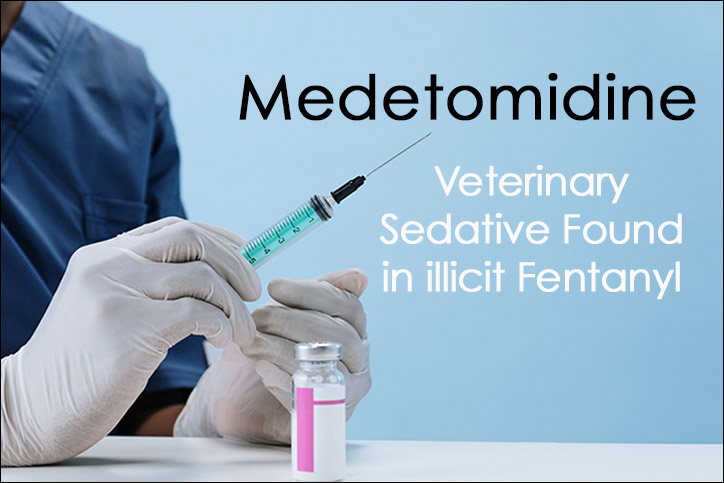
Medetomidine is a veterinary sedative, approved for use in dogs, that is now being mixed into illicit fentanyl across the United States.
It is not an opioid, it is not approved for human use in any form, and it has quickly become one of the most common additives in the street drug supply. In some cities, medetomidine now appears in most fentanyl samples tested.
In April 2026, the CDC issued a formal health advisory warning public health professionals and agencies about medetomidine in the illegal fentanyl supply, citing two dangers:
- Medetomidine overdoses don’t respond normally to naloxone
- Medetomidine withdrawal syndrome is severe enough to require intensive care
If this story sounds familiar, it should. Medetomidine is following the same path as xylazine, the horse tranquilizer drug known as “tranq” that spread through the fentanyl supply before it. Unfortunately, medetomidine is considerably more potent.
Why is a Dog Sedative in Street Drugs?
Medetomidine is sometimes called “rhino tranq” and it belongs to a class of drugs called alpha-2 adrenergic agonists, which slow the release of adrenaline in the body. Veterinarians use it to sedate dogs for some procedures. In people, the drug produces deep sedation, a slowed heart rate, and lowered blood pressure.
Illicit drug manufacturers add substances like sedatives to fentanyl to boost the volume of their product, lengthen the short-lived fentanyl high, and maximize profits.
Users rarely ask for it, most don’t know they’re taking it, and it shows up everywhere in the fentanyl supply chain, although it has spread unevenly. The Northeast has been hit hardest so far, and the Midwest is close behind.
The growth has been steep and is increasing. Law enforcement drug seizures containing medetomidine rose from 247 in 2023 to 8,233 in 2025.
In Philadelphia, where it first appeared in May 2024, drug detection programs found it in about 90% of fentanyl samples by early 2026. In the same time period, xylazine, the sedative it displaced, fell from 97% of samples to 28%.
Difference Between Medetomidine vs Xylazine
Medetomidine and xylazine are chemical cousins, and both are veterinary sedatives that were never approved for use in humans. The differences matter, though:
- Potency. Medetomidine is estimated to be 100 to 200 times more potent than xylazine, so a far smaller amount produces far deeper sedation.
- Duration. The sedative effects last longer for medetomidine vs xylazine, and people can remain unresponsive for hours.
- Heart effects. Medetomidine slows the heart rate dramatically and sometimes dangerously.
- Skin wounds. The severe skin ulcers associated with xylazine have not been linked to medetomidine, and skin infections have declined as it replaced xylazine in the supply chain.
- Withdrawal. This is the most important difference. Medetomidine withdrawal is much more severe than xylazine withdrawal, and it often requires hospital care or a medically supervised inpatient detox program.
What Does Medetomidine Do to a Person?
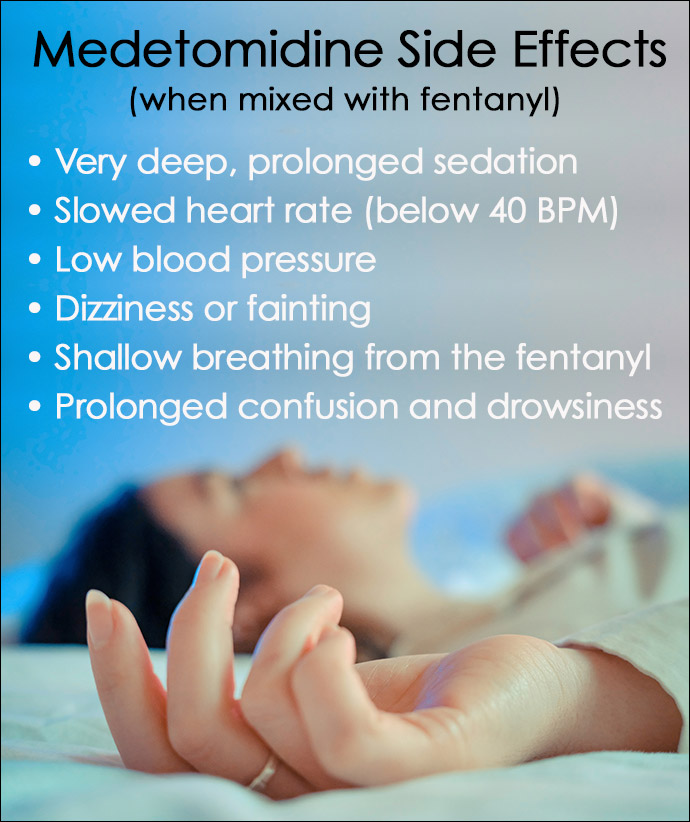
Someone who has used fentanyl containing medetomidine typically shows some of the following signs:
- Very deep, prolonged sedation that can last for hours
- Slowed heart rate, sometimes below 40 beats per minute
- Low blood pressure
- Dizziness or fainting
- Shallow or slowed breathing caused by the fentanyl it’s mixed with
- Confusion and drowsiness that continue after waking
Deep sedation is the signature effect. A person may appear to be having a typical opioid overdose but remains unresponsive long after naloxone would normally have worked.
Why Naloxone Alone Isn’t Enough, But Should Still Be Given
Naloxone (Narcan) reverses opioids, but medetomidine is not an opioid, so naloxone is not fully effective against its sedation. There is no approved reversal agent for this veterinary sedative in humans.
That does not mean using naloxone is pointless, and the opposite is true. Medetomidine is essentially always found alongside fentanyl, and fentanyl is what stops breathing. In a suspected overdose, the recommended guidance is to call 911 first and then give naloxone and stay with the person until medical help arrives.
The difference is what to expect afterward. The person may keep breathing but remain deeply sedated. Breathing is the thing to watch, and roughly once every five seconds is the benchmark.
If breathing is adequate, the extended sedation is the event a person needs to be monitored through, not additional naloxone doses.
Medetomidine Withdrawal Can Be a Medical Emergency
For people who use fentanyl regularly, medetomidine creates a second dependence in addition to the opioid one, and its withdrawal risk is proving to be the harder of the two.
When someone with a medetomidine dependence stops using it, the adrenaline system rebounds hard.
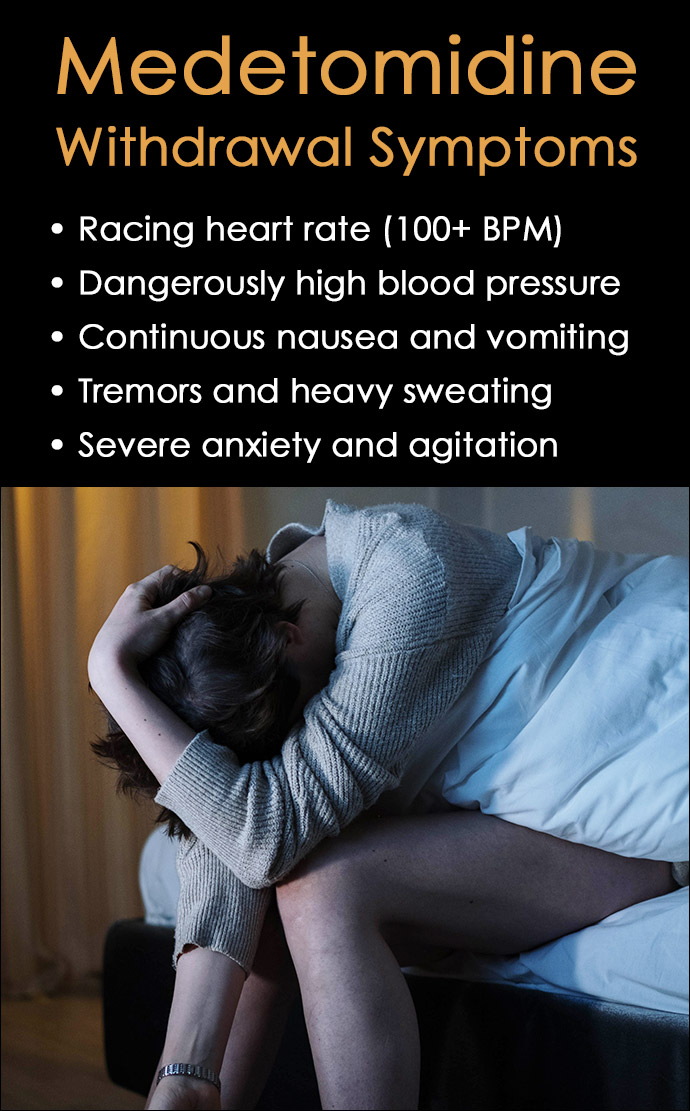
Medetomidine withdrawal symptoms can include:
- Racing heart rate, often above 100 beats per minute
- Dangerously high blood pressure
- Continuous nausea and vomiting
- Tremors and heavy sweating
- Severe anxiety and agitation
The CDC describes it as similar to withdrawal from clonidine, another alpha-2 drug, and notes it can require emergency or intensive care. In Philadelphia hospitals, most patients admitted for medetomidine withdrawal have needed the ICU.
This is the fact that changes treatment decisions. Quitting fentanyl “cold turkey” at home or even less potent opioids like oxycodone withdrawals can be dangerous and rarely successful.
With medetomidine in the public supply, unmanaged withdrawal may now create a genuinely life-threatening event. Medical detox isn’t just the more comfortable option anymore; it’s the safe one.
How Medetomidine Treatment Works
Because medetomidine dependence develops silently alongside opioid dependence, treatment starts with knowing it may be there.
A medically supervised detox can monitor heart rate and blood pressure around the clock, manage the adrenaline rebound with appropriate medications, and treat the opioid withdrawal at the same time.
From there, recovery follows the path that works for opioid, heroin, and fentanyl addiction treatment.
This generally includes residential treatment to rebuild stability, evidence-based therapies that address the root causes of opioid use, and dual diagnosis treatment when depression, anxiety, or other mental health issues are combined with addiction.
If you or someone you care about uses fentanyl, that drug on the street today is likely not the same one from a year ago. The days when “sleeping it off” were survivable keep shrinking. Professional detox and treatment are now the only safe call.
Frequently Asked Questions
Is medetomidine the same as the ‘tranq’ drug?
The ‘Tranq’ drug usually refers to xylazine. Medetomidine is a different, more potent veterinary sedative that has been rapidly replacing xylazine in the fentanyl supply and some people call it ‘rhino tranq.’ Both cause sedation that naloxone can’t reverse.
Can you overdose on medetomidine?
Yes, this veterinary sedative drug by itself can slow the heart rate and drop blood pressure to dangerous levels. It’s virtually always combined with fentanyl, which suppresses breathing, and the combination is more dangerous than either drug alone. Call 911 immediately for a suspected medetomidine overdose.
Does naloxone work on medetomidine?
No, naloxone only reverses opioids, and medetomidine is a different class of drug, but it should still be given in any suspected overdose, because fentanyl is almost always present. The person may stay deeply sedated even after the naloxone works on the fentanyl or other opioids. Watch their breathing and stay with them until medical help arrives.
How do you know if withdrawal involves medetomidine?
The most telling signs of medetomidine withdrawal are severe rebound symptoms that include a racing heart, very high blood pressure, and uncontrollable vomiting beyond typical opioid symptoms.
In regions where medetomidine is widespread, healthcare workers now assume fentanyl withdrawal may include it. It’s one more reason withdrawal should happen under medical supervision and not at home.
Are You Struggling with Addiction?
Summit Malibu was created by people in recovery for people seeking to recover. We understand where you are now and how you can find lasting change.
Contact Us Today: (310) 742-1882