Table of Contents
Seasonal Affective Disorder (SAD) is a form of depression that generally occurs in the winter months, which is why it is also called seasonal depression.
This form of depression is more than just a bout of the winter blues. Left untreated, the symptoms of Seasonal Affective Disorder can have a serious impact on a person’s life.
Understanding that the winter months might negatively affect mood and depression can make it easier for people to take steps to minimize the impact on their mental health.
Understanding Seasonal Affective Disorder
Seasonal Affective Disorder (SAD) is one of the most common kinds of depression that typically occurs as the seasons change from fall to winter when there are fewer hours of daylight.
For most people, seasonal affective disorder symptoms begin to subside as the longer days of spring return, and they spend more time outside in natural sunlight.
By some estimates, around 5 percent of people in the United States are affected by seasonal depression, with another 10 to 15 percent experiencing a milder form of the condition known as the “winter blues.”
However, full blown seasonal depression can be incredibly challenging because it changes the way a person feels and thinks.
SAD can be similar to situational depression, but much less disruptive than major depressive disorder.
When seasonal depression symptoms worsen, many individuals find their ability to carry out daily responsibilities is much more difficult than it should be, and for some people, nearly impossible.
Being able to spot the symptoms of seasonal affective disorder can help people get a head start on incorporating some easy self care ideas and effective treatment approaches to minimize the disorder’s severity.
Seasonal Affective Disorder Symptoms
Because seasonal affective disorder symptoms are a form of depression, many people experience mood changes, shifts in energy, and behavioral problems.
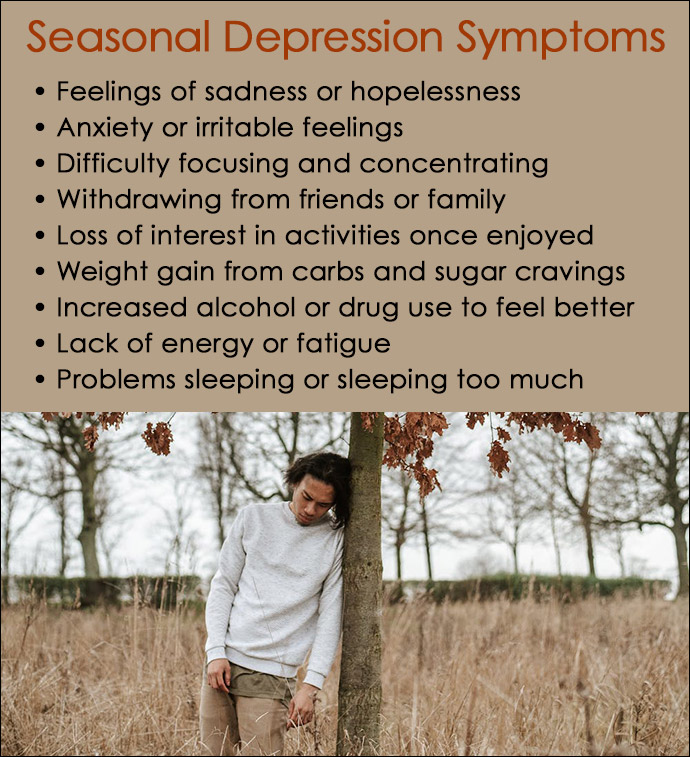
Symptoms of Seasonal Depression include:
- Feelings of sadness, hopelessness, or worthlessness for most of the day every day
- Anxiety, or being agitated and irritable
- Difficulty focusing and concentrating on things like work or school
- Withdrawing from friends, family, and other social situations
- A loss of interest and pleasure in activities normally enjoyed
- Weight gain associated with craving carbohydrates and sugar
- Increase in alcohol or drug use to cope with the symptoms
- Lack of energy, fatigue, or lethargy
- Problems sleeping and typically sleeping too much
The intensity of seasonal depression symptoms will vary from person to person, and some individuals may only experience mild ones.
Seasonal Depression Causes and Risk Factors
Individuals with mental health disorders or a family history of depression, bipolar disorder, and schizophrenia are usually at a greater risk for developing the condition.
Signs and symptoms of seasonal depression tend to start in early adulthood, often between the ages of 18 to 30 years old.
Women are more prone to the disorder than men, though researchers are unsure why.
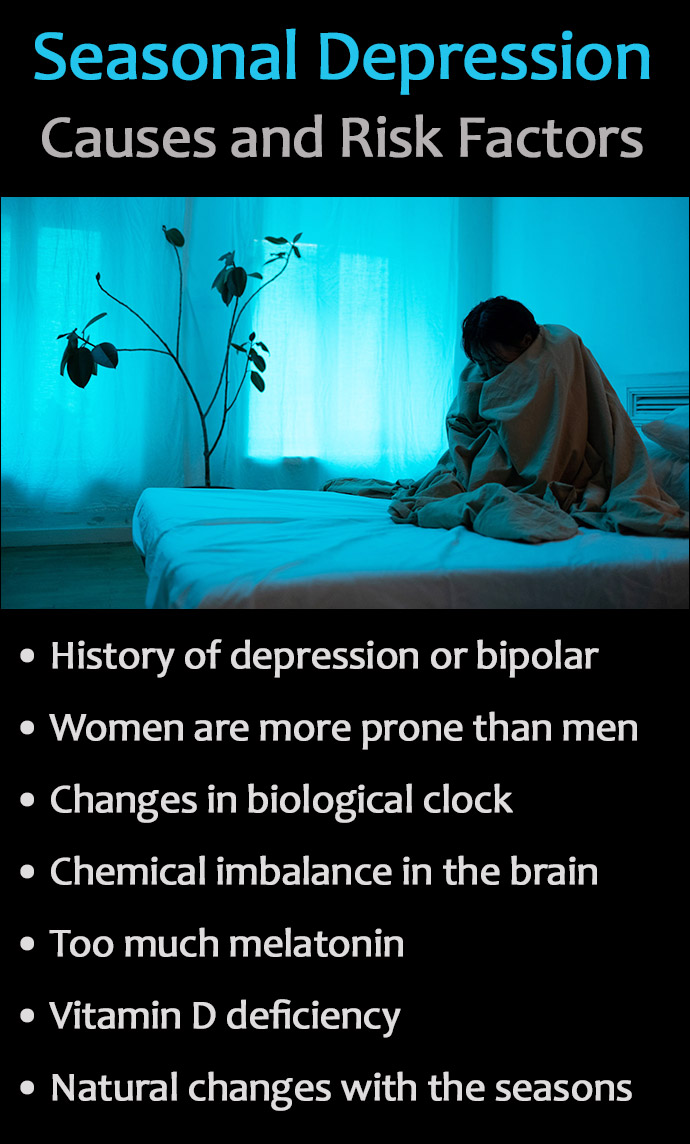
Other Causes of Seasonal Depression include:
Changes in Biological Clock
Because the shorter days of the fall and winter months have less sunlight, parts of the brain that regulate mood, hormones, and sleep begin to shift.
There is some evidence to suggest these changes can alter a person’s biological clock as the body and brain try to adjust to the lack of daylight hours.
Chemical Imbalance in the Brain
Sunlight helps regulate serotonin, a happiness chemical messenger in the brain that is associated with mood and feeling happy.
Those with other forms depression may already have lower levels of the feel-good neurotransmitter, so the lack of sunlight can make these issues even worse than normal.
Too Much Melatonin
Melatonin is another chemical in the brain that helps people regulate sleep patterns and mood. With less sunlight during the fall and winter months, a person’s brain may produce too much melatonin.
Increased levels of melatonin can leave some people feeling sluggish and chronically tired in the darker winter months.
Vitamin D Deficiency
Sunlight helps the body produce vitamin D, which in turn helps boost serotonin levels.
Fewer daylight hours and less sunshine during the winter months can cause a decrease in vitamin D and serotonin production, which leads to negative mood changes for many people.
Eating foods that increase serotonin is a natural way to regulate mood and reduce depression.
Natural Changes with the Seasons
It’s common for people who experience SAD symptoms to become more anxious as the fall and winter months approach, leaving them feeling tense, stressed, or more depressed than usual.
While it’s unclear if that is an actual cause of seasonal affective disorder, these negative patterns might certainly play a role in the onset of seasonal depression symptoms.
Depression Awareness Month is recognized every year in October, and it’s a good time to prepare for heading into winter.
Seasonal Affective Disorder Treatment
The good news is there are effective seasonal affective disorder treatments, as well as self-care techniques that can lessen the impact of the condition.
While it’s important to seek professional help for depression that impacts daily life, learning how to reduce seasonal depression symptoms can prevent the condition from becoming more severe.
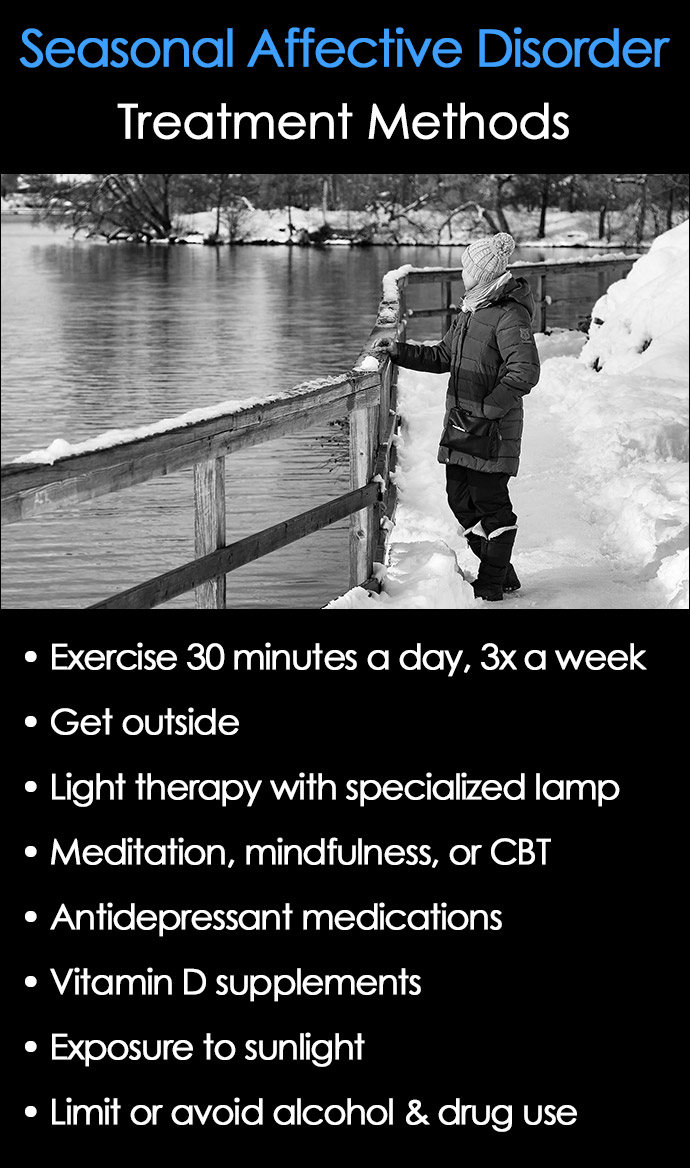
Seasonal Depression Treatment Methods include:
Exercise
Regular exercise for 30 minutes a day, at least three times a week is highly recommended for the optimal benefit. Some consider it a better antidepressant than medications.
Get Outside
Exercising or getting outside during the daylight hours whenever possible is a healthy way to get a natural mood boost.
Light Therapy
Light therapy with a specialized seasonal depression lamp for 15 to 30 minutes in the morning has shown to decrease some of the associated symptoms of the condition.
Counseling and Therapy
Counseling and talk therapy with approaches like meditation, mindfulness, and Cognitive Behavioral Therapy (CBT) are not only effective, but have shown to have a lasting impact on reducing seasonal affective disorder symptoms.
CBT techniques like mindfulness and breathing exercises help calm the mind by staying present.
Medication
Antidepressant medications, specifically those that help regulate serotonin, are often useful, especially in combination with other treatment approaches.
Supplements
Vitamin D supplements may be recommended for some individuals.
Sunlight
Increased exposure to sunlight has proven to improve the symptoms of seasonal depression, which is why it’s important to get outside whenever possible.
Avoid Drugs and Alcohol
The negative effects of alcohol use and drugs have an unhealthy impact on mood, so it’s recommended to limit or avoid using them to cope with depressive symptoms.
Some of these seasonal depression treatment approaches can be a challenge depending on where a person lives, and whether they have the time and opportunity to get outside or exercise during sunlight hours.
If it’s not possible to soak up natural sunshine during the winter months, exercising indoors, limiting drugs and alcohol, and taking supplements can help limit the impact of seasonal affective disorder until spring arrives.
Frequently Asked Questions
When does seasonal depression start?
Seasonal Affective Disorder, or Seasonal Depression, generally starts in late fall or early winter when the daylight hours are shorter.
Early symptoms can begin in October and become more severe as winter progresses in December through February.
As daylight hours become longer in the spring, the symptoms gradually improve for most individuals.
What type of disorder is seasonal affective disorder?
The DSM-5 classifies seasonal affective disorder as ‘Major Depressive Disorder with Seasonal Pattern.’
It is a form of depression that follows a seasonal pattern, meaning the symptoms typically begin in the fall and end in the spring for most people.
Why does seasonal depression happen?
Seasonal depression happens due to seasonal changes related to decreased daylight hours in the fall and winter. Fewer daylight hours interrupt normal brain functioning that regulates sleep and mood.
Shorter days with less sunshine in the winter disrupt the body’s normal circadian rhythm and reduce the ability to produce Vitamin D, which can lead to symptoms of depression.
Can seasonal depression happen in the summer?
Yes, seasonal depression can happen in the summer, although it’s less common than in the winter and may occur for different reasons.
For people who experience0 summer seasonal depression, it starts in the spring and ends in the fall and may be caused by the extra hours of sunlight.
This can lead to insomnia, anxiety, and weight loss instead of weight gain in the winter when people are less active and crave carbs.
What hormone causes seasonal affective disorder?
Instead of being caused by a single hormone, several hormones or neurotransmitters play a role in seasonal affective disorder.
Fewer hours of sunlight in the winter decreases production of the neurotransmitter serotonin, which is important for mood.
Less sunlight or activity can also disrupt dopamine production and have a similar effect.
Production of the hormone melatonin is enhanced in the winter during shorter daylight hours. Increased melatonin interrupts the normal sleep cycle and can cause people to feel lethargic and drowsy during the day from inadequate sleep.
How common is seasonal affective disorder?
On average, approximately 5% of people in the United States experience seasonal affective disorder symptoms.
The rates of SAD symptoms in the winter are higher for people who live farther from the equator than those who are closer to the equator.
People in Alaska have very few hours of daylight in the winter, so it can be more common for them than people in Florida or California.
Can you have seasonal depression and regular depression together?
Yes, it’s possible for an individual to have seasonal depression and another form of depression at the same time.
SAD is a ‘seasonal’ form of major depressive disorder that usually occurs at specific times of the year.
Major depressive disorder isn’t triggered only by seasonal changes, so a person who lives with the condition throughout the year will notice it becomes worse when combined with SAD symptoms that appear in the winter.