Table of Contents
A stress response is the brain and body’s way of reacting or responding to a stressful situation that involves the “fight or flight” mechanism built into all of us.
An occasional stress response can be a healthy way to keep us safe or alert.
However, repeated stimulation of the stress response can have a negative impact on both physical and mental health and lead to chronic stress, anxiety, and eventually depression.
Stress Response Definition
The term stress response is best defined as, “the body’s automatic reaction to a perceived or real threat.”
A stress response occurs in the brain when a person reacts or responds to some form of perceived danger, and it begins in the amygdala.
The amygdala is part of the limbic system and is located deep in the brain and controls decisions and emotions like anxiety and fear.
When the amygdala senses a dangerous situation, it passes the information to the hypothalamus, which sends signals through the autonomic nervous system to the rest of the body.
The autonomic nervous system (ANS) regulates various functions of the body, such as breathing, heart rate, digestion, and reflex actions.
The ANS consists of two systems involved in the stress response: the sympathetic nervous system (SNS) and the parasympathetic nervous system (PNS).
The Sympathetic Nervous System (SNS) is the main component of the fight or flight stress response that helps the body react more efficiently to avoid danger by increasing blood flow, circulation, breathing, and other bodily functions.
The Parasympathetic Nervous System (PNS) is the second component of the stress response and helps the body calm and rest after danger has passed by returning bodily functions to a normal and relaxed state.
During a stress response, the SNS system acts like the gas pedal of a car to engage the body to fight or flee, and the PNS acts like the brakes to slow down when it is time.
All of this happens very quickly and is a normal part of brain and body functioning to prepare and relax the body when dealing with stress.
Unfortunately, when the stress response occurs too often, it can lead to chronic stress that negatively impacts physical and mental health including types of anxiety disorders and depression.
Causes of Stress Response
A little bit of pressure or stress in our daily life can be healthy and pushes us to accomplish challenges and goals that may seem difficult.
On the other hand, when the stress response is frequently called into action and becomes chronic, it can lead to the breakdown of a person’s mental and physical health.
Chronic, negative stress can be either internal or external. This means it can internally come from an unhealthy view of our self that manifests in patterns of negative thought.
An external stress response can be caused by work, school, a toxic family environment, or personal relationships.
In many cases, it is a combination of both internal and external stress that negatively impacts our mental health and leads to unhealthy behaviors such as using drugs and alcohol to self-medicate the symptoms.
Common causes of stress response include:
- A lack of personal safety, abusive relationships, being homeless, or living in dangerous areas and neighborhoods prone to violence
- Constant fear of loss, such as the fear of losing a job, the loss of financial stability, personal health, or the death of a loved one
- Inability to stop worrying about a particular issue, or constant worries over situations that have not yet happened
- A lack of control in certain aspects of person’s own life
- Belief that we are unable to deal with the challenges before us, or that we don’t have the resources to handle certain problems
- Negative belief in oneself and a view of life that is predominantly pessimistic
It’s important to understand that everyone has a different threshold for chronic stress in the way they react vs. respond to fear or danger.
Something that triggers one person’s stress response may not even raise an eyebrow for someone else.
Remaining patient and learning how to respond vs. react can help us move through the difficult symptoms of a stress response.
Stress Response Symptoms
Our response to stress affects the entire body, including our physical organs, mental health, and the ability think clearly.
Despite the undeniable data on how stress affects our lives, it’s easy for people to overlook it as a driver of mental and physical illness.
Recognizing stress response symptoms can help people take steps to slow down, examine their life, and work to clear the mind of unnecessary worry.
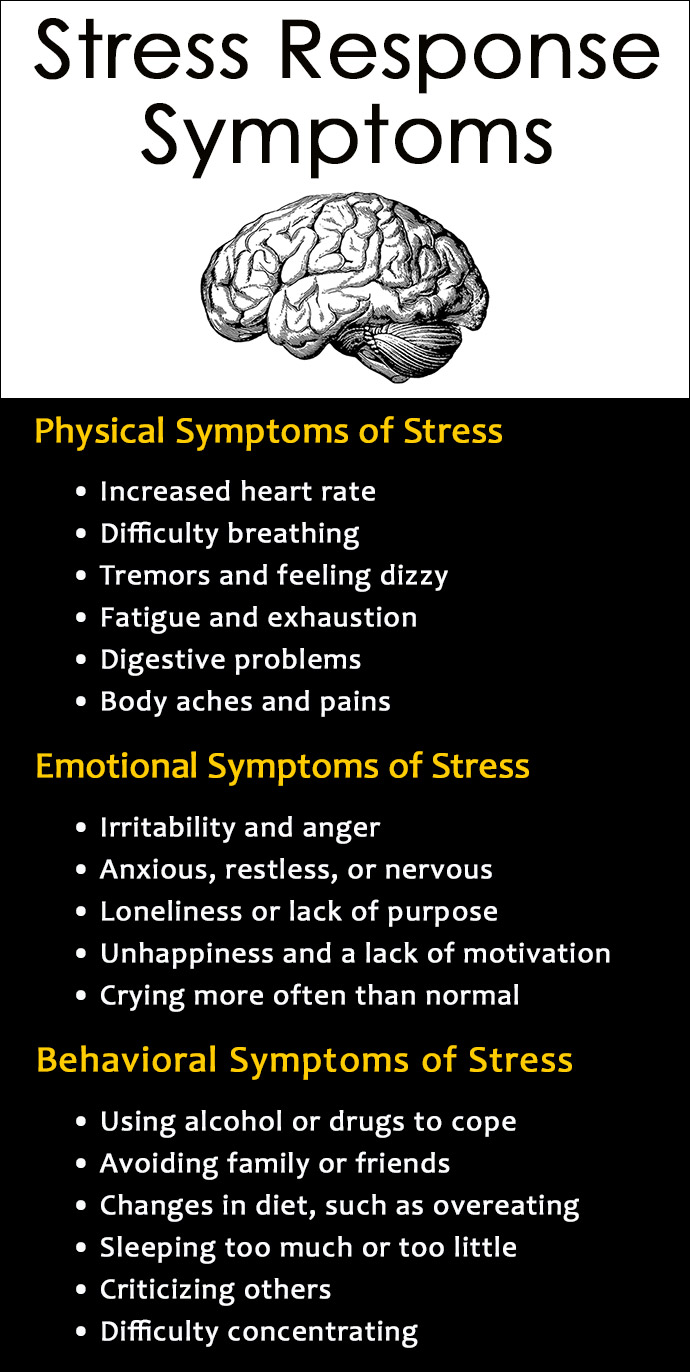
Physical Symptoms of Stress Response
- Increased heart rate, palpitations, hypertension, or difficulty breathing
- Tremors, excessive sweating, feeling faint or dizzy
- Teeth grinding, ringing ears, problems going to sleep or staying asleep
- Chronic fatigue and exhaustion
- Digestive problems and the frequent need to urinate
- Unexplained aches and pains in the body
- Diminished libido or lack of desire to have sex
Emotional Stress Response Symptoms
- Easily overwhelmed, leading to irritability, anger, or having a short temper
- Feeling anxious, restless, or nervous most of the time
- A sense of isolation, loneliness, or a lack of purpose
- General sense of unhappiness and a lack of motivation
- Crying more often at small things that normally don’t bring tears
Behavioral Symptoms of Stress
- Drinking alcohol or doing drugs to cope with stress
- Avoiding family, friends, or activities once cherished
- Changes in diet, such as overeating
- Sleeping too much or too little
- Feeling the need to criticize others unnecessarily
- Difficulty concentrating, making decisions, or completing tasks
While our instinct might be to downplay the symptoms of stress in our life, experiencing even a handful of these symptoms can be incredibly disruptive, causing our body and mind to break down over time.
Difference Between Reacting vs. Responding to Stress Response
The words “react” and “respond” might seem similar, but there is an important distinction between the two when dealing with stress.
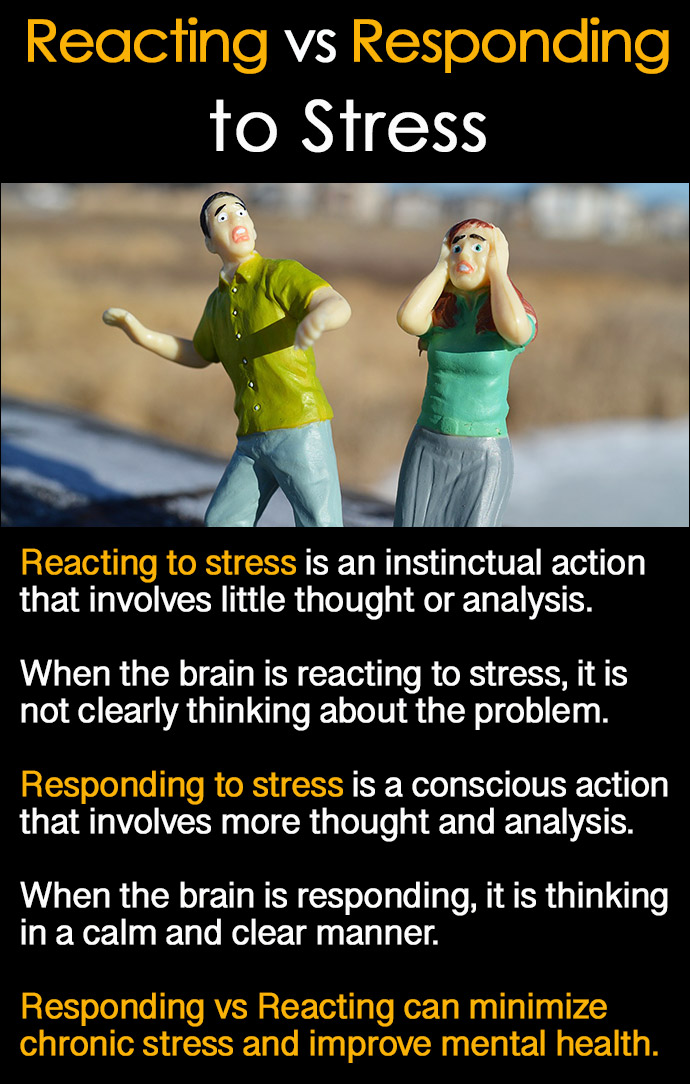
Reacting to stress is a basic, instinctual action that increases adrenaline and triggers our unconscious need to survive danger in a life-threatening situation.
This is certainly useful in dangerous situations, but not so helpful when it comes to managing stress in the workplace or at home.
“Reacting to stress” involves little thought or analysis.
Reacting to stress happens almost unconsciously to avoid a perceived threat in the short term. This can be expressed by yelling at someone about something they did wrong, or it may cause someone to use drugs or alcohol to cope and unwind.
On the other hand, “responding to stress” is a conscious decision that involves a higher level of awareness and thinking.
When responding vs. reacting to stress, it’s necessary to identify the stress response is happening and take time to assess and respond to the situation in a positive and productive manner instead of simply reacting to it.
Responding to stress requires using our intelligence and thought processes to reflect on the situation and slow the automatic effects of a stress response.
One way to do this is to identify the threat or cause of a stress response, take a breath, analyze it, and decide if there is a need to fight or flee the situation.
If there is no real threat to our safety, then we can relax and find an appropriate solution to the problem.
The difference between reacting vs. responding can be approximately 10 seconds in many cases.
This is important because when the brain is reacting to something, it is not clearly thinking about what is happening – it is only reacting.
When the brain is responding, it is thinking in a calm and clear manner, which results in a more appropriate action.
Taking the time to analyze the situation can be for a few seconds, minutes, or hours depending on what is happening.
Learning to respond vs. react to stress takes effort, but mastering this technique will minimize the likelihood that chronic stress affects our physical and mental health.
Negative Effects of Stress Response on Mental Health
The immediate effects of the stress response can begin physically in the body.
This creates an increased heart rate, tension in the neck and shoulders, high cortisol levels, and a surge of energy that fuels the fight or flight response.
Living with a stress response on a regular basis is not sustainable because it leads to poor physical health by damaging our immune system and breaking down the body.
The constant high-alert sense of impending doom also wears away our ability to maintain a healthy mood and emotions.
If left untreated, the effects of chronic stress on the body and mind starts a cycle that can lead to the following mental health issues:
- Anxiety disorders and panic attacks
- Depression
- Sleep disorders, such as insomnia
- Increased symptoms of other existing mental health issues
The good news is that we don’t have to live with chronic stress. There are effective ways of treating it to improve our stress response and decrease the negative symptoms it causes.
Therapy Options for Stress Management
Addressing the toxic stress in our life can be difficult. For many people, especially those who experienced childhood trauma, a certain level of stress can feel like a normal part of living.
When people seek treatment for managing stress and anxiety, they often come to understand that life is much more rewarding when given the tools to move past daily stressors.
Medications like antidepressants, benzodiazepines, and certain types of anxiety medication can be helpful when combined with therapy, although they are not a cure.
Benzodiazepines should only be used temporarily, and it’s necessary to be aware of the side effects of Ativan, Xanax, and similar drugs.
Effective Stress Treatment Approaches
Cognitive Behavioral Therapy (CBT)
Cognitive Behavioral Therapy teaches people ways to become aware of negative or inaccurate thought patterns.
Common CBT techniques offer strategies to challenge unhealthy thoughts and behaviors by responding effectively.
Dialectical Behavior Therapy (DBT)
Dialectical Behavior Therapy was originally developed to treat borderline personality disorder and includes group and individual therapy.
Dialectical strategies teach people how to manage their emotions, increase their ability to tolerate perceived stressors, and improve relationships with more thoughtful responses to stress.
DBT can be useful for learning how to respond vs. react to a stress response by being more mindful with our thought processes.
Acceptance and Commitment Therapy (ACT)
Acceptance and Commitment Therapy teaches that it is counterproductive to try to control or change painful emotions or experiences because this will only lead to more anguish.
ACT Therapy provides alternatives to changing the way we think using six core processes that focus on mindfulness, attention to values, and a commitment to action.
Mindfulness Therapies
Mindfulness therapies help people learn to focus on moment-by-moment experiences while keeping an attitude of openness, acceptance, and curiosity.
These approaches emphasize living in the present moment and learning how to avoid being stuck in patterns of negative thoughts and emotions. Practicing mindfulness is beneficial for teaching people to respond vs. react to stress.
Grounding Techniques
There are many different types of grounding techniques and exercises to reduce stress, and many of them work almost immediately.
The 54321 Grounding Technique is easy to do anywhere and is very effective and engages all the senses at once.
Vagus Nerve exercises can be helpful for activating the parasympathetic nervous system to relax the body and promote a sense of calm.
It’s impossible to completely avoid having a stress response because it is a built-in human necessity designed to keep us safe.
However, understanding the difference between reacting vs. responding to stressful situations and identifying a stress response when it occurs can minimize the impact on our mental health.
Frequently Asked Questions
What is the stress response?
Stress Response is the body’s natural alarm system that is intended to keep us safe from danger and help us survive.
It is commonly known as the ‘fight or flight response’ that takes over automatically when we perceive a threat.
How does the body respond to stress?
During a stressful event, the brain quickly activates the sympathetic nervous system to release hormones that prepare the body for fight or flight.
Breathing increases to improve oxygen levels, as well as heart rate and blood pressure to the muscles, brain, and organs for faster reaction times and survival.
The mind becomes hyper-alert and more focused to concentrate on the single task of staying safe.
What is the order of stages in the body’s response to stress?
The body goes through 3 stages during a stress response: alarm, resistance, and exhaustion.
1. The Alarm Stage is the automatic fight or flight response that activates the sympathetic nervous system to prepare the body to react to a threat.
2. The Resistance Stage maintains heightened levels if the threat is still imminent or adapts by decreasing levels if the threat is avoidable or has ended.
3. The Exhaustion Stage occurs when the body becomes fatigued and overwhelmed, which can cause anxiety, depression, a weakened immune system, and mental health issues.
What is the difference between reaction vs response?
The main difference is a reaction is automatic and unconscious, while a response is deliberate and consciously thought through.
A reaction happens quickly and instinctively and is driven by emotions. It is a survival mechanism to keep us safe.
A Response is more deliberate and pauses to evoke a higher level of cognitive thought, reasoning, and problem solving.
Taking time to thoughtfully respond to a stressful event instead of reacting to it reduces anxiety and offers better outcomes.
Which hormone is involved in the stress response?
The main hormone released during a stress response is cortisol, which is why it is often called the ‘stress hormone.’
Other hormones activated during stress include Adrenaline (epinephrine) and Noradrenaline (norepinephrine).
Adrenaline is released in large bursts to quickly prepare the body for fight or flight, while Noradrenaline is released in smaller amounts to regulate and maintain the body’s processes.